
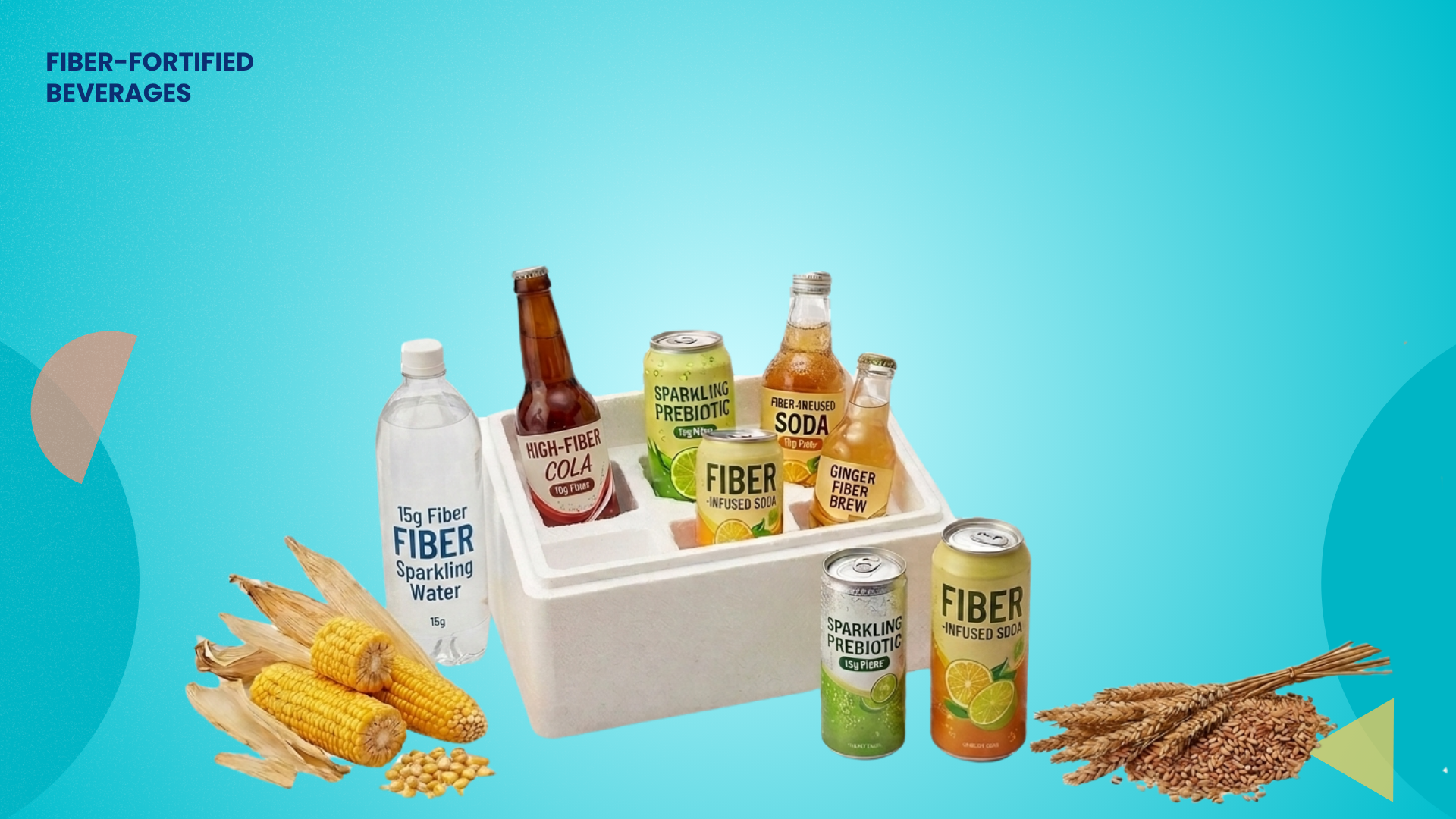



If you’re a beverage formulator, the fibermaxxing trend has shifted your job from simple fortification to designing for functional benefits.
Hitting a 6–9g claim used to be the finish line. But now the fiber should ferment at the right speed so that GLP-1 users experience less bloating. It must carry polyphenols and other actives to gut microbes. And in clear waters, sparkling SKUs, and hard seltzers, fiber must remain optically transparent even at high doses.
ADM/Matsutani, FutureCeuticals, and Herbstreith & Fox are solving this. But the answers are scattered across their patents, clinical studies, and shelf-ready products. From marine algae-based fibers and bleach-free brightening technologies to ion-controlled water systems, these companies are shaping the next generation of high-fiber beverages.
We mapped these emerging ingredients and technologies to uncover the science behind them and their commercialization potential for fiber-fortified beverage SKUs.
ADM/Matsutani’s resistant maltodextrin is well-tolerated even at high doses for GLP-1 users
Fibersol® is a soluble dietary fiber produced by enzymatically modifying starch (e.g., corn or tapioca). It resists digestion in the small intestine and is fermented by the gut microbiota in the colon. This fermentation process produces short-chain fatty acids, which trigger specific cells in the gut lining to release GLP-1. This process helps influence insulin secretion, appetite, and glucose control in the user.
Consumers can tolerate up to 68g of Fibersol per day, helping them meet the recommended daily fiber intake with less discomfort than other fibers.
ADM positions Fibersol-2 (powder) and Fibersol-2AG (agglomerated) as ideal solutions for all beverage types, including juices, fortified waters, shakes, smoothies, dairy-based drinks, coffee, tea, energy drinks, carbonated beverages, and non-alcoholic beer.
It has excellent water solubility and forms a clear solution.
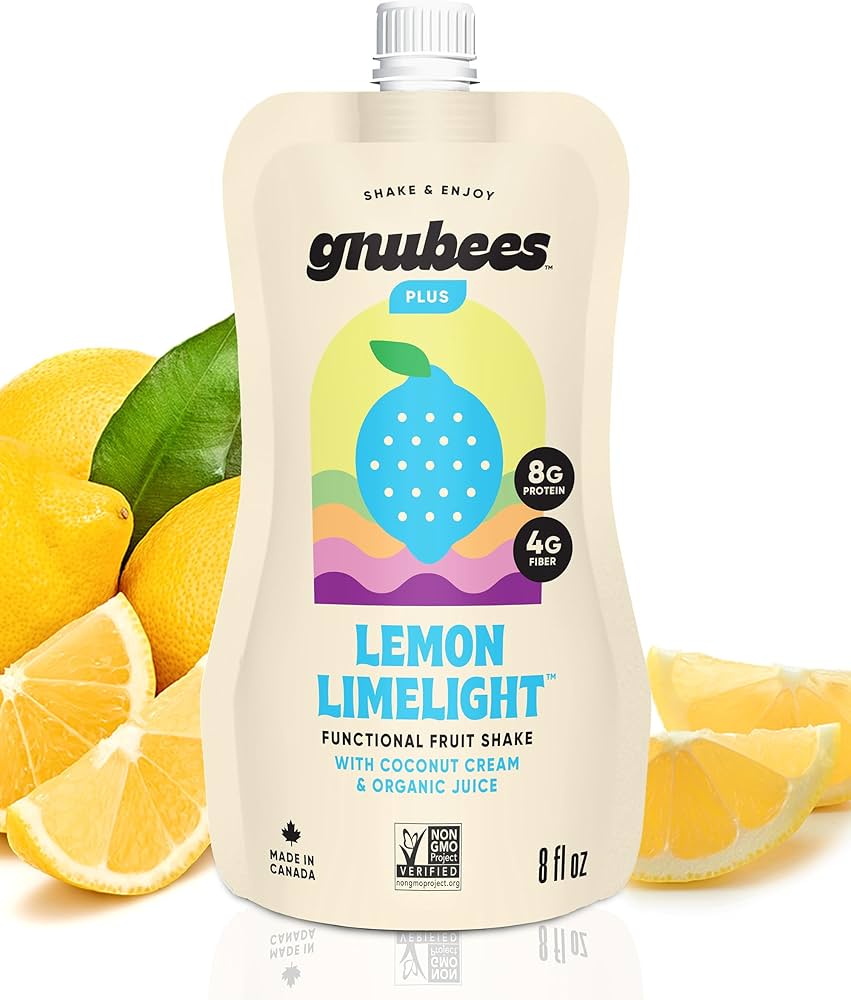
Canadian brand GnuSanté Creations has used Fibersol in its Gnubees Protein Smoothie. The ready-to-drink protein smoothie contains 8g of grass-fed protein and 4g of soluble prebiotic fiber, along with 30% of the daily recommended intake of vitamins C and D.
The USFDA includes Fibersol in its official definition of dietary fiber, recognizing its proven beneficial health effects. Companies can list Fibersol as soluble corn fiber, soluble vegetable fiber (corn), digestion-resistant maltodextrin, resistant maltodextrin, or maltodextrin on the label.
Fibersol-2 meets the FDA GRAS requirement for maltodextrin under 21 CFR 184.1444. It is certified kosher, pareve, and halal.
This makes Fibersol a strong option for brands building GLP-1-adjacent beverage portfolios.
While Fibersol is easy to add to formulations, GLP-1 ingredients like CQR-300® and Dyglomera® stand out for their positioning through DPP-4 inhibition. However, many of these ingredients introduce bitterness, formulation instability, and labeling complexity in the end product. Therefore, only a fraction is making it to scalable, consumer-ready formats.
To see which ingredients are moving closer to market, we mapped them across three stages: research-backed or patented, clinically tested, and commercialized.
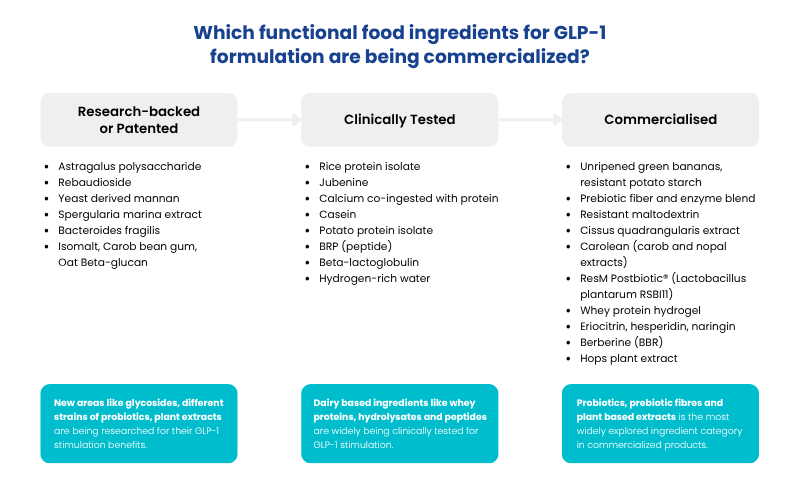
Author’s Note: This ingredient analysis is part of our GLP-1 Food Landscape Report, which offers a deeper view of commercialized ingredients, validated formulations, and real product examples shaping the next wave of high-fibre GLP-1 food and beverage products.
PURE Brands’ ion-controlled water system enables optical clarity even in high-fiber formulations
Consumers are increasingly looking for fiber-enriched hydration products. However, adding fiber often increases viscosity, resulting in a thick, gummy, or syrupy mouthfeel. This makes fiber fortification especially challenging in clear waters, carbonated drinks, and RTD teas, where consumers expect a light, water-like texture.
Many brands currently use resistant dextrin because it provides fiber with lower viscosity than some inulin or fructooligosaccharides. Even so, many high-fiber beverages on the market remain cloudy and often require de-foaming agents to be commercially viable. Achieving optical clarity at meaningful fiber levels, without such additives, has remained a major technical challenge.
Pure Brands Inc. addresses this issue by controlling the ion composition of the water used in the beverage formulation. The patent focuses on soft water or reverse osmosis water. The preferred fiber is arabinoxylan, a plant-based polysaccharide made from arabinose and xylose sugars, commonly sourced from wheat.
Specific levels of ions such as sodium, potassium, calcium, magnesium, and chloride can determine how well fiber remains dispersed and transparent in a beverage.
Hard water contains high levels of calcium and magnesium, which cause arabinoxylan to aggregate and turn cloudy. Formulators can reduce these divalent ions and replace them mainly with sodium ions to keep the fiber fully dissolved and optically clear.
They also add trisodium citrate as a chelating agent to bind any remaining divalent ions. The process further includes a post-heat oxygen infusion step. This oxidizes sulfur bridges in the fiber and removes the sulfur-like off-taste that can develop at high arabinoxylan concentrations, without using flavoring agents.
UHT sterilization followed by instant flash cooling then provides up to 12 months of shelf stability without preservatives.
The final beverage is optically clear, low in viscosity, shelf-stable, and largely free from added sugars, acids, sweeteners, flavors, and stabilizers. It may contain 3–40 g of fiber per liter, with turbidity of 0.0001–25 NTU and viscosity of 1–25 mPa·s, making it appear and feel close to plain water.
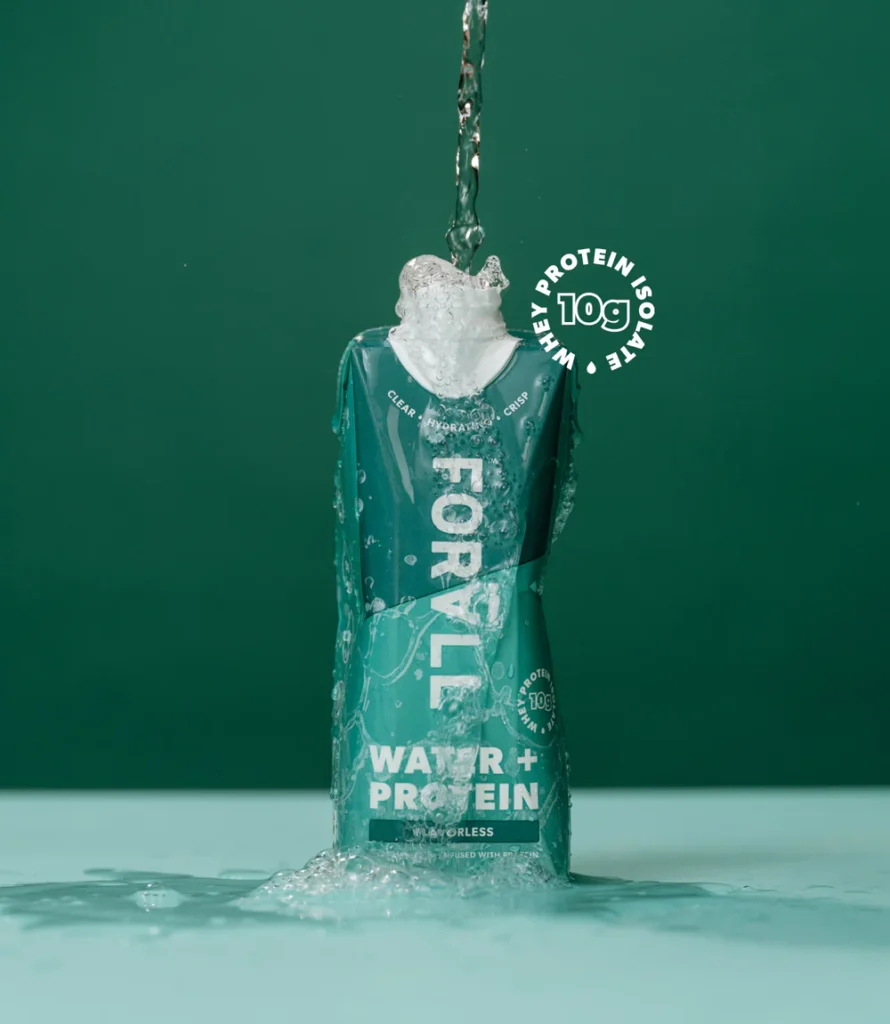
PURE Brands previously commercialized a ready-to-drink protein water under its FORALL brand.
FORALL WATER+PROTEIN packs purified water with European grass-fed whey protein isolate in a 500 mL / 16.9 fl oz bottle. It delivers 10 g of protein per bottle. The ingredient list mentions sodium citrate, sodium bicarbonate, and potassium bicarbonate, which indicates that the product may have used a similar ion-controlled water system to maintain taste, clarity, and protein stability.
FutureCeuticals binds polyphenols to dietary fiber for better gut microbe interaction
Studies suggest that dietary fiber and polyphenols have a synergistic effect within the gut microbiome. They support microbial diversity, increase SCFA production, and strengthen the gut barrier.
However, most dietary polyphenols are absorbed in the upper digestive tract. They never reach the lower colon, where most microbiome-driven activity happens. As a result, free polyphenol supplements deliver their benefits in the wrong place.
FutureCeuticals addresses this gap by binding polyphenols to dietary fiber via steric encasement, ionic binding, or covalent bonding. This patented method protects polyphenols in the mouth and stomach. It then releases them later in the intestine, where they can directly interact with gut microbes.
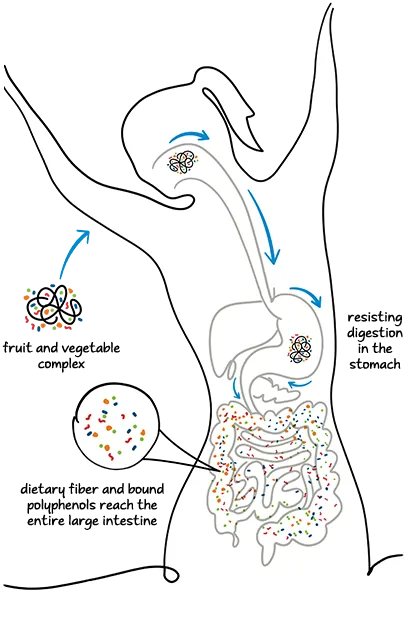
These bound polyphenols work in synergy with fiber. They increase SCFA levels, support microbial growth, and enhance diversity beyond what fiber alone can achieve. Their gradual release also slows fermentation. This helps avoid rapid metabolic spikes that produce harmful byproducts like ammonium, which can damage colonic epithelial cells.
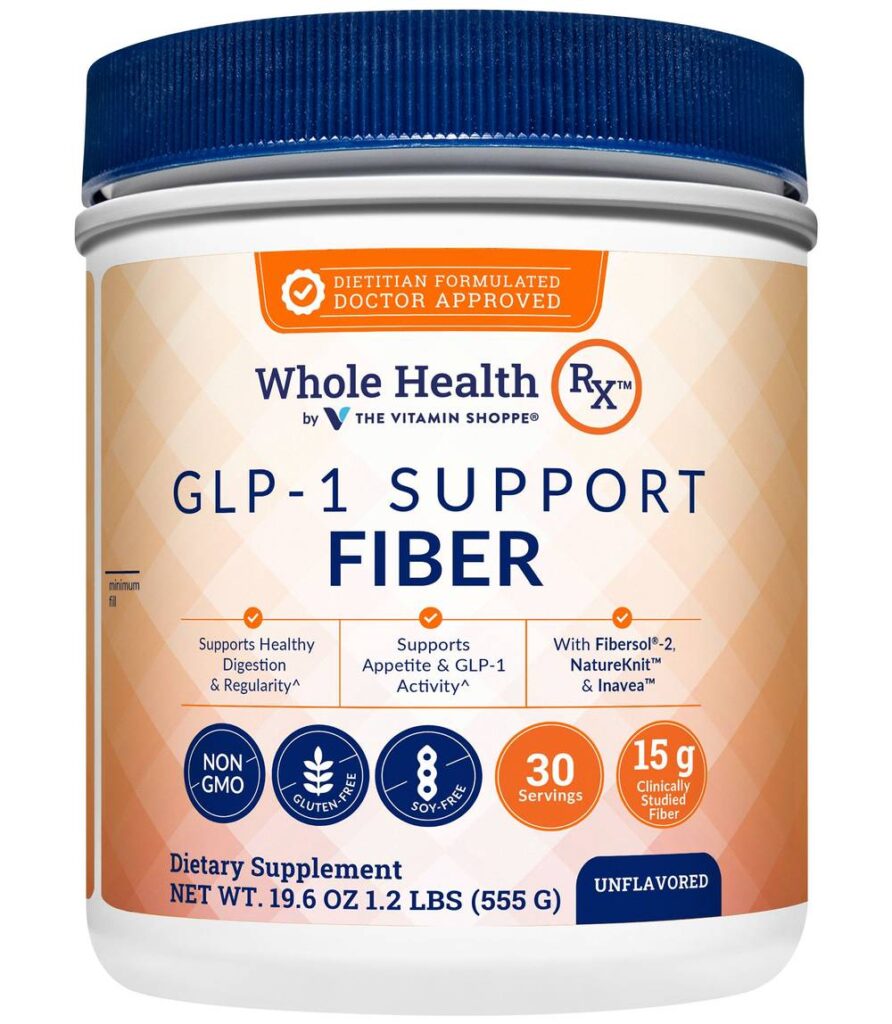
FutureCeuticals uses this technology to produce its B2B ingredient, NatureKnit®. The company actively promotes NatureKnit for ready-to-mix beverages. However, current market evidence mainly shows brands commercializing it in supplements, including Whole Health Rx’s GLP-1 Support Fiber, LifeSource Vitamins’ Ultra Gut Care Powder, and Tailor Made Nutrition’s Advanced Gut Care Powder, where they use it for fiber fortification.
Herbstreith & Fox is fixing the browning issues of plant-based fiber, without bleaching
Darker plant fibers from apple and carrot pomace alter beverage color, making the final drink look less appealing to consumers. Many existing methods use bleaching or oxidizing agents to solve this problem. However, these methods are becoming less attractive as brands shift toward cleaner labels and minimally processed ingredients.
German company Herbstreith & Fox addresses this challenge by brightening plant fiber before manufacturers use it in formulations. Its patented approach targets lignin, a plant cell wall component that causes browning.
The process uses residue left after pectin extraction as the raw material. Herbstreith & Fox treats this residue in an alkaline solution, such as NaOH or KOH, or an enzymatic solution, such as laccase or peroxidase enzymes. These solutions break down lignin without using bleaching agents.
A key part of the method is preserving the fiber’s structure during drying. Many brightening processes overlook this step. After incubation, the fiber is washed with water. It is then washed with at least two rounds of organic solvent, usually alcohol.
This solvent-washing step prevents the fiber’s internal porous structure from collapsing. As a result, the fiber retains its viscosity, water-binding capacity, and creamy texture. These qualities make it valuable for commercial beverage applications.
The treated fiber achieves an L* brightness value above 68, and in some cases, up to 90. This makes the fiber visually colorless in beverage applications. L* refers to lightness in the CIELab color system. A higher L* value means the material appears brighter and whiter.
Because lignin is removed rather than simply masked, the brightness remains stable. The fiber shows no yellowing even after six weeks at 60°C.
The brightened apple fiber made through this method contains 80% to 95% fiber by weight. It adds no flavor or aroma to the final product. It also uses a processing residue that would otherwise become waste.
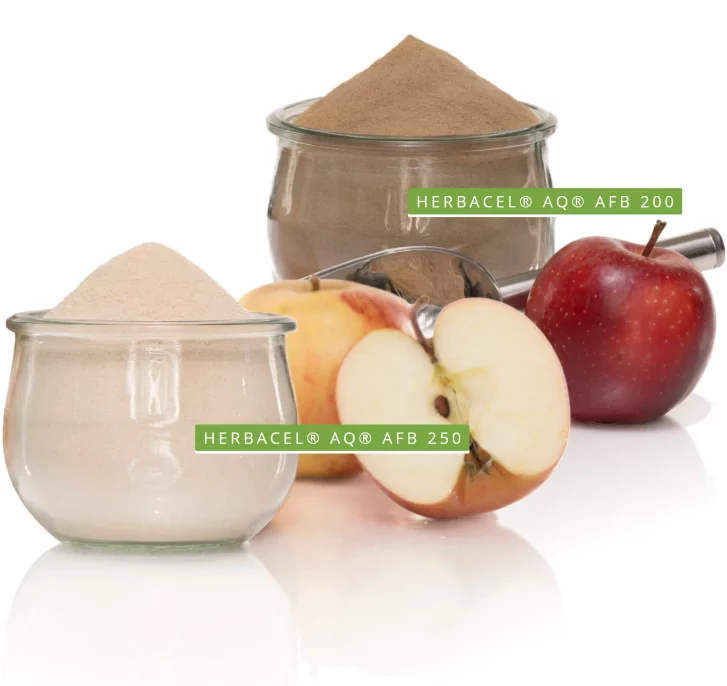
Herbstreith & Fox has commercialized similar products through its subsidiary, Herbafood.
One example is Herbacel® AQ® AFB-250. It supports color-neutral applications and delivers high functionality. Beverage manufacturers can use it where a bright color is important to the product. These features show a strong link between the commercial product and the patented technology.
GGOG is using marine algae in its high-fiber beverage mix to support gut health
Qingdao Gather Great Ocean Algae Industry Group Co., Ltd. (GGOG), a Chinese marine biotechnology and seaweed-processing company, is extending its seaweed expertise into high-fiber beverage innovation.
The company has patented a high-fiber beverage powder that combines marine-derived fiber, such as fucoidan, with resistant dextrin, inulin, polydextrose, fructooligosaccharides, stachyose, and steviol glycosides. This blend has nearly 88.5% soluble fiber, almost three times higher than the mainstream composite fiber average.
The key idea is to combine slow and fast-fermenting fibers to support gut health. FOS and stachyose ferment quickly, inulin ferments at a medium speed, and resistant dextrin ferments slowly. As fibers break down in stages, the body keeps producing short-chain fatty acids for longer, reducing common side effects such as gas and bloating in the consumer.
Fucoidan’s key advantage lies in targeting intestinal barrier integrity. It increases tight junction protein expression by 2.3×, a benefit that inulin and resistant dextrin do not typically offer.
The formulation addresses a long-standing barrier that has limited the use of algae-derived ingredients in consumer beverages: taste. It improves palatability by masking marine off-notes with steviol glycosides.
Currently, GGOG supplies fucoidan as a functional ingredient for pharmaceutical applications. It has various biological functions, such as anticoagulation, antitumor, antithrombotic, antiviral, antioxidant, and immunomodulatory effects. This makes it an attractive ingredient for functional food and beverages, nutraceuticals, and cosmetics.
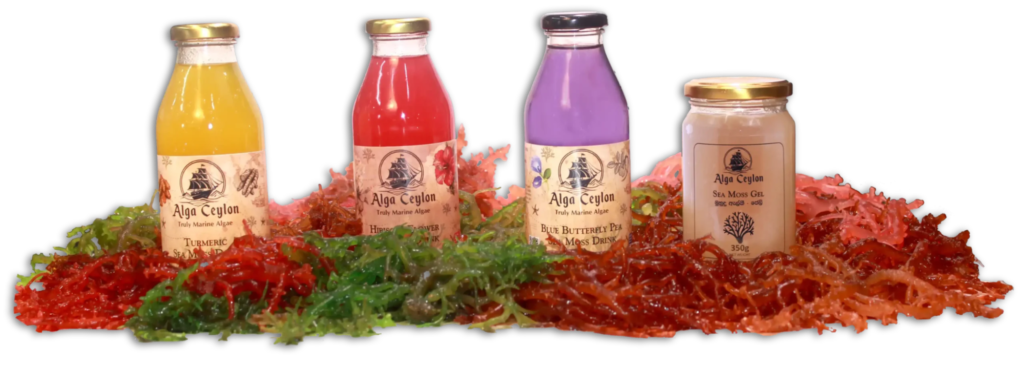
Analyst comment: Market analysis shows that marine algae positioning is resonating with consumers in the hydration beverage market. Recently, Laird Superfood in the US launched Hydrate Coconut Water, which features marine algae Aquamin™. Meanwhile, a Sri Lankan food and beverage company, Alga Ceylon, is marketing a range of sea moss-based RTDs in various flavors.
Which other ingredients and technologies are enabling fiber fortification in RTD beverages?
Ingredients such as resistant dextrin, PHGG, inulin-FOS blends, oat beta-glucan, konjac glucomannan, psyllium, and GOS are being explored across RTDs, dairy beverages, functional waters, fermented drinks, and instant mixes. However, fiber fortification requires careful balancing of clarity, viscosity, taste, sedimentation, shelf stability, and digestive comfort.
Formulators are exploring enzymatic hydrolysis, particle-size reduction, homogenization, pulsed light processing, and multi-fiber blending to overcome these challenges. The research is scattered across scientific papers, clinical studies, and patents, and fiber fortification is moving faster than any single platform can fully capture.
Slate, our R&D intelligence tool, connects patents, papers, and clinical studies in one interface so you’re the person in the room who already knows what’s coming. Just ask, “What novel ingredients and formulation technologies are beverage brands using to increase fiber content while minimizing taste, texture, and gastrointestinal tolerance challenges?”