



The next cocoa butter alternative may come from an algae, brewery, or even carbon pulled from thin air.
What was once experimental is now entering the market. Mondelēz and Celleste Bio have already shown that cells from a single cocoa bean can yield enough cocoa butter for multiple chocolate bars. SMEY is screening more than 1,000 non-GMO yeasts to identify strains with the right melting profile. Meanwhile, Endless Food is turning beer waste into cocoa-butter-free chocolates. Some early-stage startups are even exploring fat systems for chocolate made directly from carbon capture.
Most of these technologies have moved beyond early proof-of-concept. The harder question is which of these will produce a cocoa butter alternative that meets the chocolate industry’s requirements for snap, melt, and cost.
This analysis maps the complete landscape of cocoa butter alternatives: which technologies are commercially available today, which require pilot validation before scale-up, where regulatory barriers remain, and which whitespace opportunities are still emerging. For each technology cluster, we identify the key players, technical approach, and commercial stage.
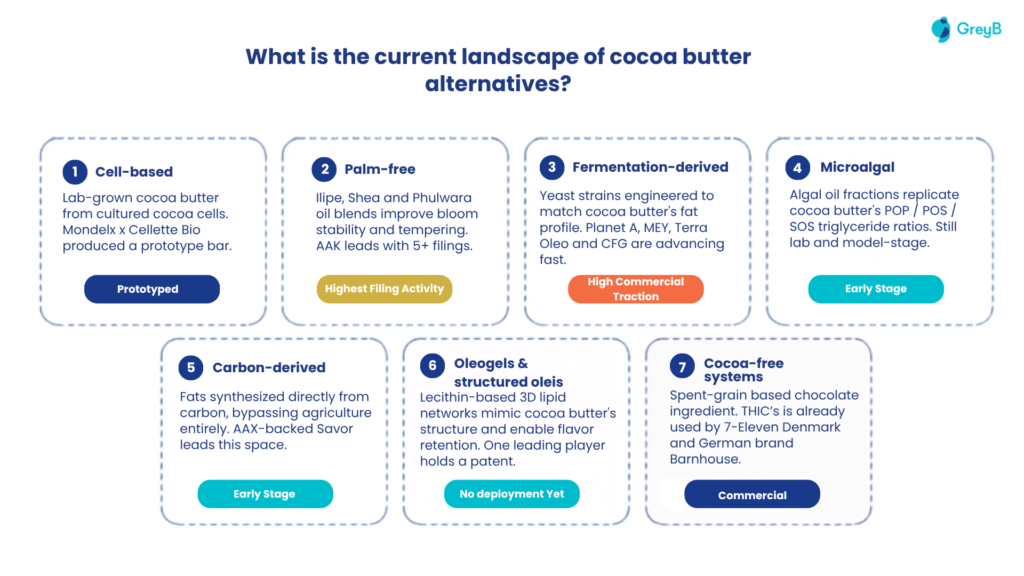
Palm-free CBEs domain saw the highest patent filing activity
The palm, cocoa, and shea supply chains are under increasing pressure due to the European Union’s Deforestation Regulation (EUDR). Rising costs and sourcing risks are pushing producers to seek reliable alternatives. As a result, palm-free cocoa butter equivalents have emerged as the most active area for patent filings.
AAK has the most diversified portfolio in the domain. The ingredient company has developed a palm-free cocoa butter by blending Illipe oil with shea or sal oil. AAK has filed patents for this blend in five jurisdictions: WIPO/PCT, the European Patent Office, Japan, China, and Mexico. This suggests that the blend has strong commercial potential.
Other palm-free solutions by AAK use Phulwara oil middle fraction and vegetable fat blends containing C14 Fatty acids (myristic acid).
Cell-based cocoa butter has reached prototype stage
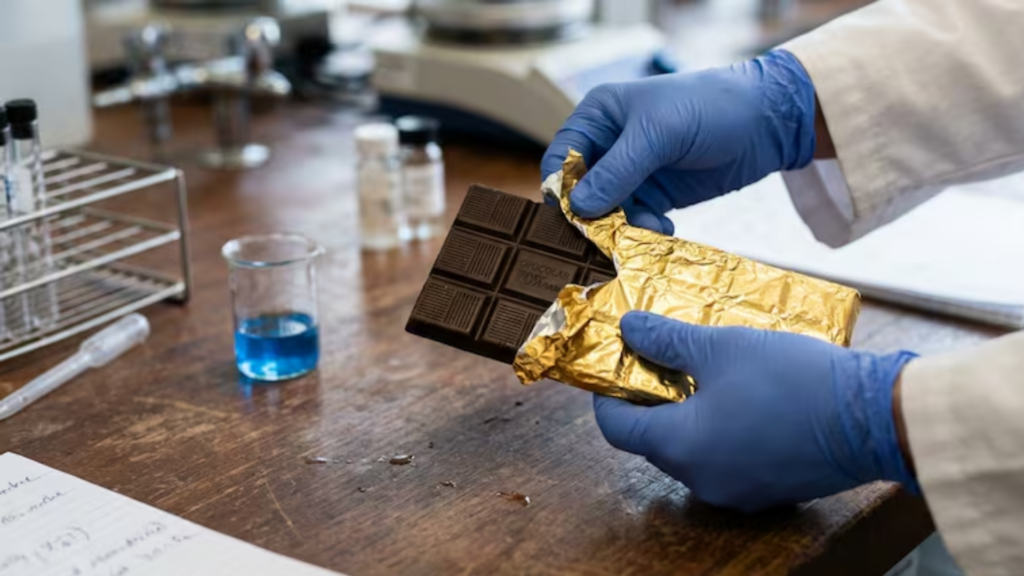
Mondelēz, in partnership with Celleste Bio, has produced the world’s first milk chocolate bar using lab-grown cocoa butter. After producing a dozen prototypes, Mondelēz now aims to support commercial-scale production within two years.
Celleste Bio produces cocoa butter by extracting cells from a single cocoa bean and growing them in a controlled environment with water, sugar, and vitamins. The cells can reproduce for an extended period without requiring more cocoa beans. Although the process begins with cocoa cells, it reduces the dependence on heavy cocoa supply and traditional farming.
The startup also uses AI to adjust cocoa butter’s properties to meet manufacturers’ product needs. Celleste claims this approach can improve consistency, strengthen supply reliability, and reduce formulation trials and material waste.
Analyst Comment: Recently, US startup California Cultured has secured self-affirmed GRAS status for its cell-based cocoa powder. However, self-affirmed GRAS is not the same as FDA approval or an FDA “no questions” letter. For Celleste specifically, the company is targeting US and Israeli clearance by the end of 2027, with Europe expected to take longer. Moreover, consumer acceptance will also become a key challenge once the products receive approval and enter the market.
Fermentation is reducing crop dependence and stabilizing ingredient supply
Clean Food Group is using non-GMO oil-producing yeasts to manufacture alternatives to cocoa butter. The process reduces dependence on tropical crops, agricultural land, and volatile international supply chains. The yeast consumes sugars obtained from circular feedstocks, including surplus bread and other food-industry waste. Currently, the company is targeting chocolate and confectionery markets with two ingredients, CLEANFat™ 50 and CLEANOil™ 40.
CFG has also produced chocolate prototypes containing its yeast-derived fat. The prototype was publicly displayed at London’s Science Museum. However, it was described more specifically as “containing its yeast-made palm oil alternative”, rather than a fully validated one-to-one cocoa butter equivalent.
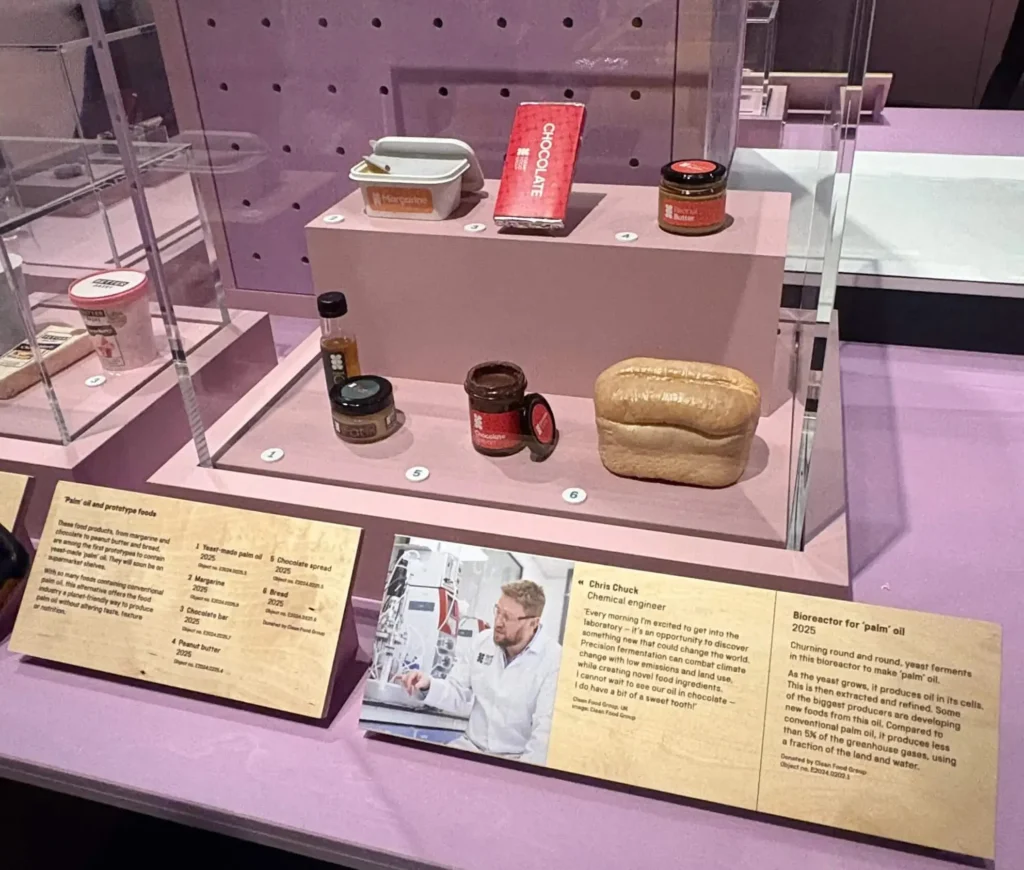
In 2025, Clean Food Group acquired the assets of Algal Omega 3 Ltd. This gave the company access to one million liters of fermentation capacity at a 12-acre facility in Knowsley, in the Liverpool City Region.
Brands are engineering unconventional yeasts to produce fats without relying on cocoa farms or tropical oil supply chains. Planet A, for example, uses Yarrowia lipolytica to develop cocoa butter identical fats. Other startups are working with Rhodosporidium toruloides and Apiotrichum brassicae. But these latest developments are scattered across patents, research papers, startup activity, and market data. Our R&D research platform brings all of these together and connects them into a clear picture. Simply ask:
What are the latest developments in fermentation-derived cocoa butter alternatives?
SMEY is leveraging proprietary AI to identify high-performing yeasts for scaling fermentation
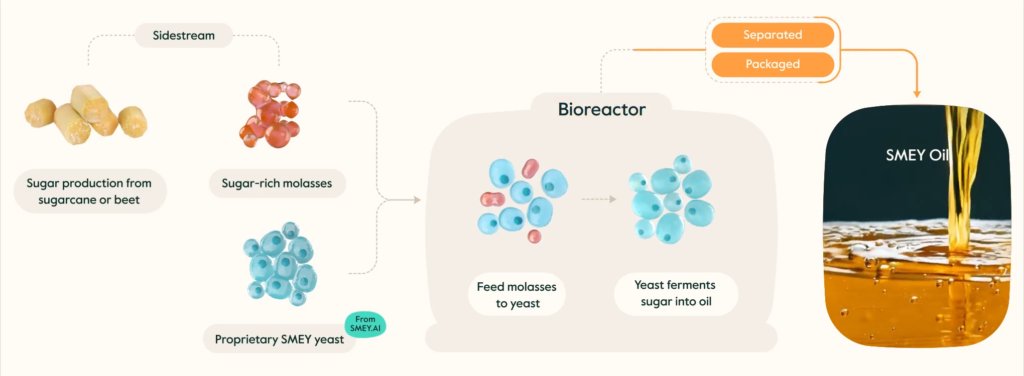
Germany-based startup SMEY has developed Noyl Cocoa™ using precision fermentation and artificial intelligence.
It identifies naturally oil-producing yeast strains using NOY (Neobank of Yeasts). This is proprietary library containing more than 1,000 non-GMO yeast species. Each yeast is characterized for lipid production and genetic traits.
A database called Lipid Atlas maps each yeast’s fatty acid composition, oil yield, and functional properties. Machine learning predicts which yeast strains are most likely to produce a target oil.
The system also guides strain improvement and fermentation optimization, reducing experimental screening. SMEY reports cultivated oil yields of about 75 g/L from its optimized strains.
Terra Oleo is producing sustainable cocoa butter by fermenting agro-industrial waste
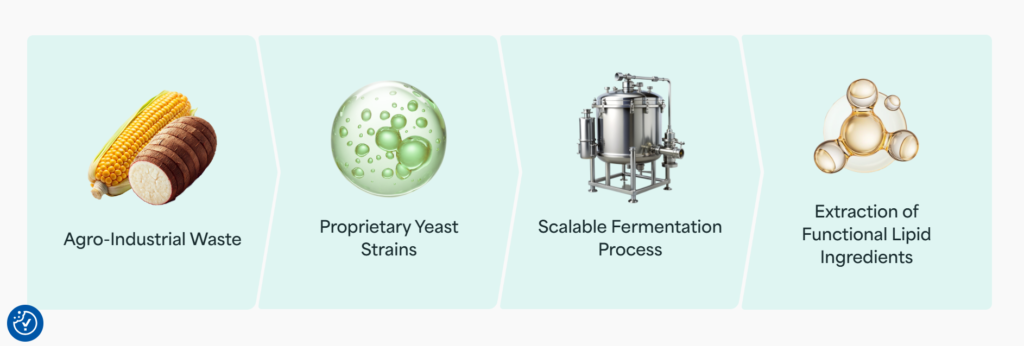
Terra Oleo is a Singapore-based biotechnology startup that upcycles agro-industrial waste to produce a sustainable alternative to cocoa butter. It uses waste from the starch, biodiesel, and oleochemical industries as low-cost feedstock for yeast fermentation.
The company uses metabolic, genetic, and enzyme engineering to control how yeast produces and stores fats. Different yeast strains can produce fats with specific fatty acid profiles, melting points, crystal structures, and functional properties. This approach allows Terra Oleo to design ingredients around customer needs rather than produce a single standard oil.
The target lipids serve as functional ingredients across food, personal care, and cosmetic applications. They are traceable and designed to support compliance with the EU Deforestation Regulation.
Founded in 2023, Terra Oleo emerged from stealth in September 2025 after raising US$3.1 million. The company was also selected for Breakthrough Energy’s 2025 Fellows Program.
Microalgal CBEs are credible but remain at the lab stage
Microalgal CBE is technically credible, but public evidence remains concentrated in laboratory and model-chocolate studies.
A 2020 study found that special fat made from oil-rich microalgae can melt and crystallize similarly to cocoa butter. However, it contains more low-melting fats, making it softer and less heat-resistant. It may work better as a partial replacement rather than a complete substitute.
Earlier, a 2018 study showed that algal butter had a melting point, hardness, and fat structure similar to shea fat. It also mixed well with cocoa butter in test chocolates. However, the research used model chocolate formulations, so wider commercial testing is still needed.
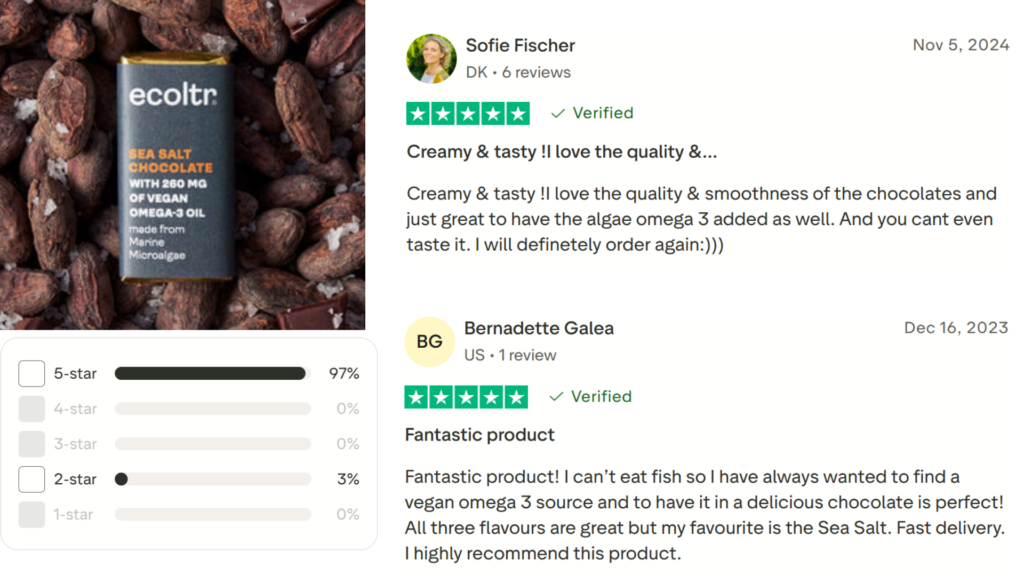
Currently, algal oil is used in chocolate, primarily for omega-3 fortification rather than to replace cocoa butter. A commercial example is the Danish brand ecoltr®. It sells vegan dark chocolate containing DHA- and EPA-rich oil from the marine microalga Schizochytrium. However, the formulation still contains cocoa butter.
On Trustpilot, consumers described ecoltr® as creamy, smooth, and tasty. Some specifically said that they did not have any off-taste from the algae-derived omega-3 oil.
Startups have developed cocoa-free systems that eliminate the need for cocoa butter
Danish startup Endless Food has developed THIC™, a chocolate-like ingredient designed to replace conventional cocoa mass and cocoa butter in chocolate formulations. The patented ingredient is mainly produced from food-industry by-products. This includes brewer’s spent grain and oat spent grain. Cacao husk may also be added to strengthen the chocolate flavor.
The spent grains are dried, milled, and combined with edible fat and sugar. The mixture then undergoes refining, conching, tempering, and molding. This provides the chocolate required gloss, snap, and improved resistance to fat bloom. Importantly, particles are reduced to below 40 microns to create a smooth texture without noticeable grittiness.
THIC™ contains fiber and protein from spent grains. Manufacturers can use this nutritional benefit to make their products more appealing to health-conscious consumers.
The ingredient is available as chips, chunks, blocks, granules, and powder for different food manufacturing applications. It can be used in cookies, croissants, brownies, coatings, mousses, ganaches, and ice cream.
7-Eleven Denmark uses THIC® chips as a chocolate-like inclusion in its freshly baked cookies.
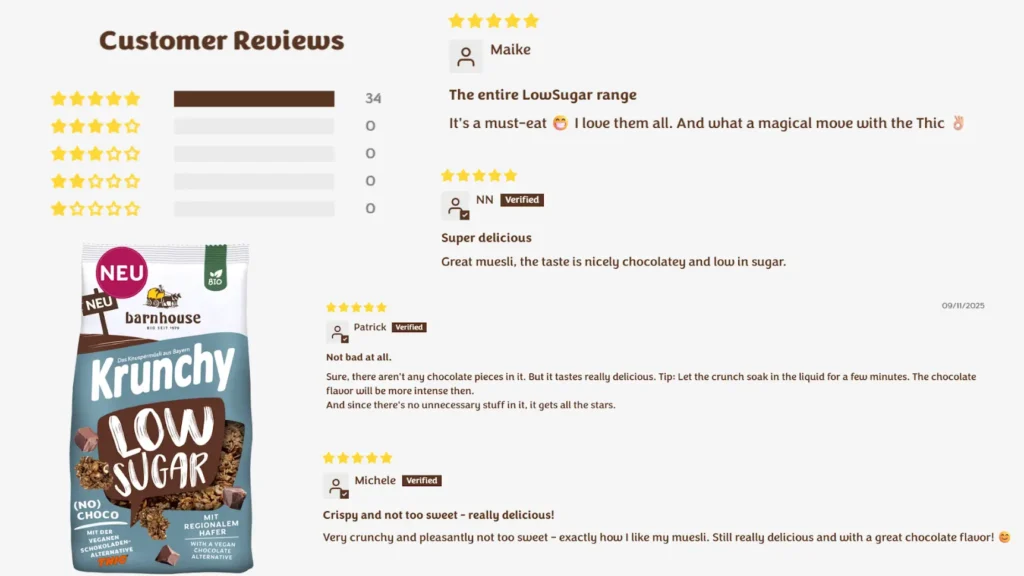
German organic cereal company Barnhouse uses the ingredient in its vegan Krunchy Low Sugar (No) Choco granola. Barnhouse is using THIC® to expand its low-sugar product range. The company was facing the formulation challenge of delivering a rich chocolate experience while maintaining low sugar levels.
The product page currently shows an average rating of 5/5. Some consumers even praised the company’s move to include THIC in the product. However, this feedback is based on only 34 customer reviews. While encouraging, the sample is too small to draw conclusions about broader consumer acceptance of THIC™.
In May 2026, Endless Food entered a Danish foodservice distribution partnership with Dagrofa Foodservice. The company raised approximately € 1 million in 2024, led by Nordic Foodtech VC, with participation from EIFO and Rockstart. The funding supported production scale-up, development of a pilot facility, and expansion of the company’s team.
An early life-cycle assessment commissioned by Endless estimated that THIC™ produces around 84% fewer greenhouse-gas emissions than conventional dark chocolate.
What are the emerging whitespaces in the cocoa butter alternatives space?
Carbon-derived fats remain one of the earliest-stage technology clusters. However, ingredient company AAK is already exploring this space through a strategic partnership with Savor. The startup produces fats directly from carbon, without relying on cocoa beans or other agricultural feedstocks.
Oleogels and structured oils show moderate innovation activity, with Nestlé holding a relevant patent. However, no oleogel-based cocoa butter alternative has yet reached commercialization.
We have mapped the complete landscape of cocoa butter alternatives to understand how FMCG companies such as Hershey, Mars, and Barry Callebaut are approaching reformulation. The analysis also identifies where white-space opportunities are emerging.
Fill out the form below to explore which solutions R&D teams can reformulate with today and which emerging technologies still require pilot validation before scale-up.