


Every extra gram of protein you add to ice cream risks breaking something: texture, mouthfeel, overrun, or clean-label ingredient constraints. Viscosity increases, and chalky protein ruins the taste. In practice, this means multiple failed trials, unstable batches, and weeks lost trying to balance protein and texture. These challenges are intensifying as brands race to meet the high-protein demands of a growing GLP-1 user base.
Current industry solutions include the use of emulsifiers such as guar gum, gum arabic, and xanthan gum to improve the taste and texture of ice cream. But lately, they have been under scrutiny for contributing to type 2 diabetes, obesity, and gut health issues.
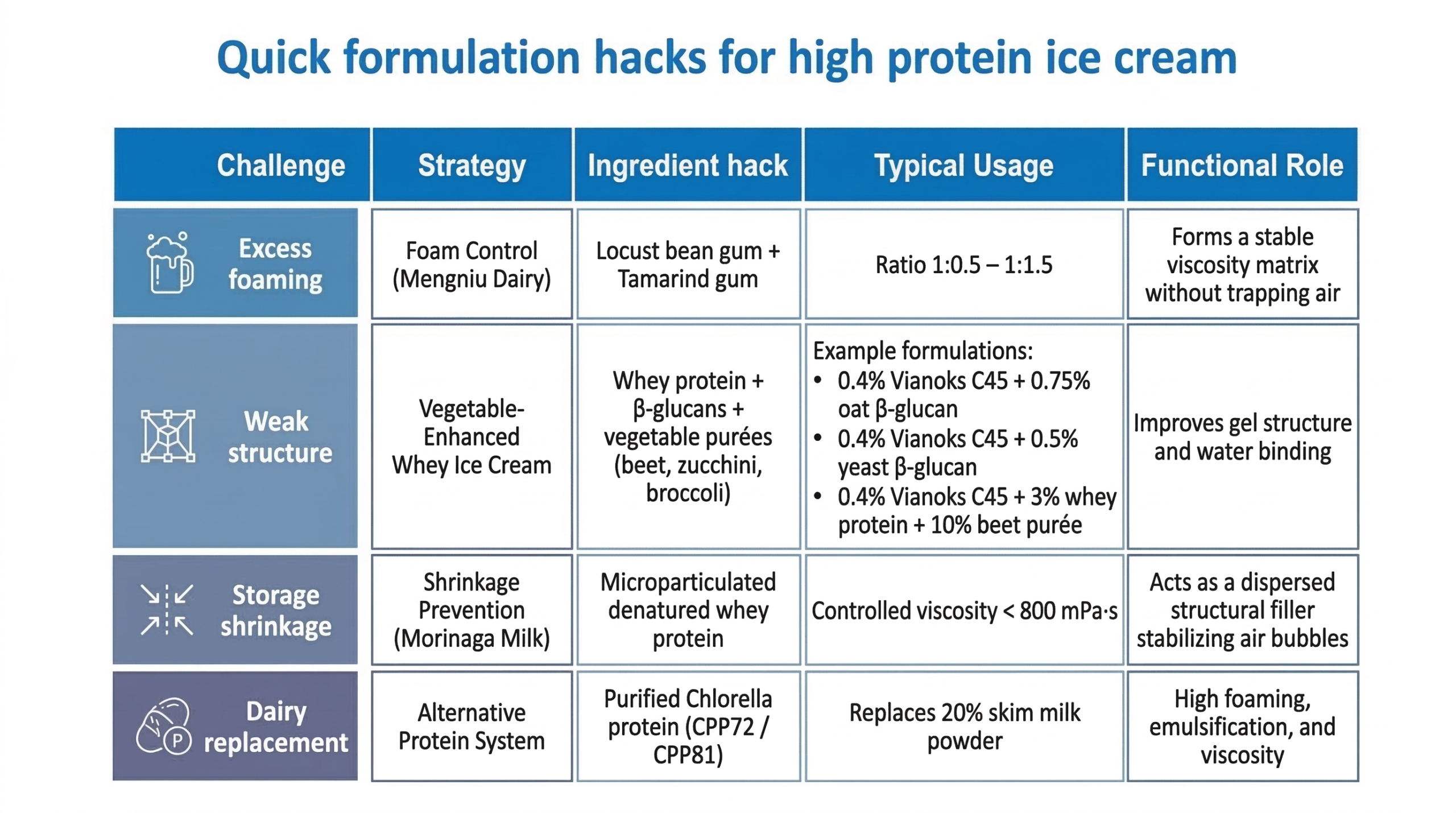
According to global ice cream patent analysis, innovation in ice cream is largely driven by Asia. China held over 40% of active global ice cream patents, with companies like Mengniu Dairy and Morinaga Milk actively working to increase protein content across their product lines. In this article, we take a closer look at their R&D to discover how combining vegetable purées, denatured whey proteins, and plant-based thickeners can control texture, foaming, and shrinkage in high-protein ice creams.
During the patent analysis, we also found that ice cream formulators were working extensively on sugar reduction, recreating rich creaminess in plant-based formats, and replacing chemical emulsifiers with clean-label alternatives. Brands like Nestlé, Mengniu Dairy, and Nosh.bio are exploring faba beans, coconut milk, and fungi protein to develop vegan, dairy-free ice cream formulations.
Meanwhile, Buza Ice Cream has been relying on micromilling technology to reduce sugar in its products. Download our Ice Cream 2026 report to explore these emerging formulation strategies and ingredient systems used by leading ice cream players.

Mengniu Dairy eliminated excessive foaming in high-protein ice creams without using chemical defoaming agents
High levels of whey protein in ice cream formulations can cause several processing issues. The liquid ice cream mix foams excessively. This foam builds up in mixing tanks, disrupting continuous production. Foam also causes holes, rough surfaces, and poor appearance in finished ice cream products.
Physical defoaming with steam or high heat damages the ice cream’s structure. Meanwhile, chemical defoamers conflict with clean-label positioning.
Mengniu Dairy addresses this issue with a specific blend of Locust bean gum and Tamarind gum (1:0.5 to 1:1.5). These plant-based thickeners form a stable matrix that controls viscosity without trapping air. This works better than commonly used xanthan, CMC, or guar gum blends.
Use this approach when high whey protein levels (>5–6%) cause persistent foaming during mixing. Start by testing locust bean gum–tamarind gum blends in the 1:1 range and monitor air incorporation during batch processing. The strategy will help you make high-protein, clean-label ice creams with desirable texture and appearance without using chemical defoaming agents.
Mengniu Dairy has established a comprehensive high-protein innovation ecosystem spanning advanced processing technologies, proprietary product formulations, and clinical validation programs. One of their breakthrough technologies combines ultrasonic treatment with the addition of neutral protease to produce high-protein fermented milk (≥6g/100g protein).
Meanwhile, the company is also addressing off-flavor challenges in hybrid protein systems using a proprietary masking system that comprises fat and flavor components in a specific ratio. This strategic portfolio highlights specific formulation strategies that can be adapted in high-protein dairy formulations. These developments can be tracked with our R&D intelligence platform, Slate. Just ask, “What is Mengniu Dairy doing in the high-protein space?”
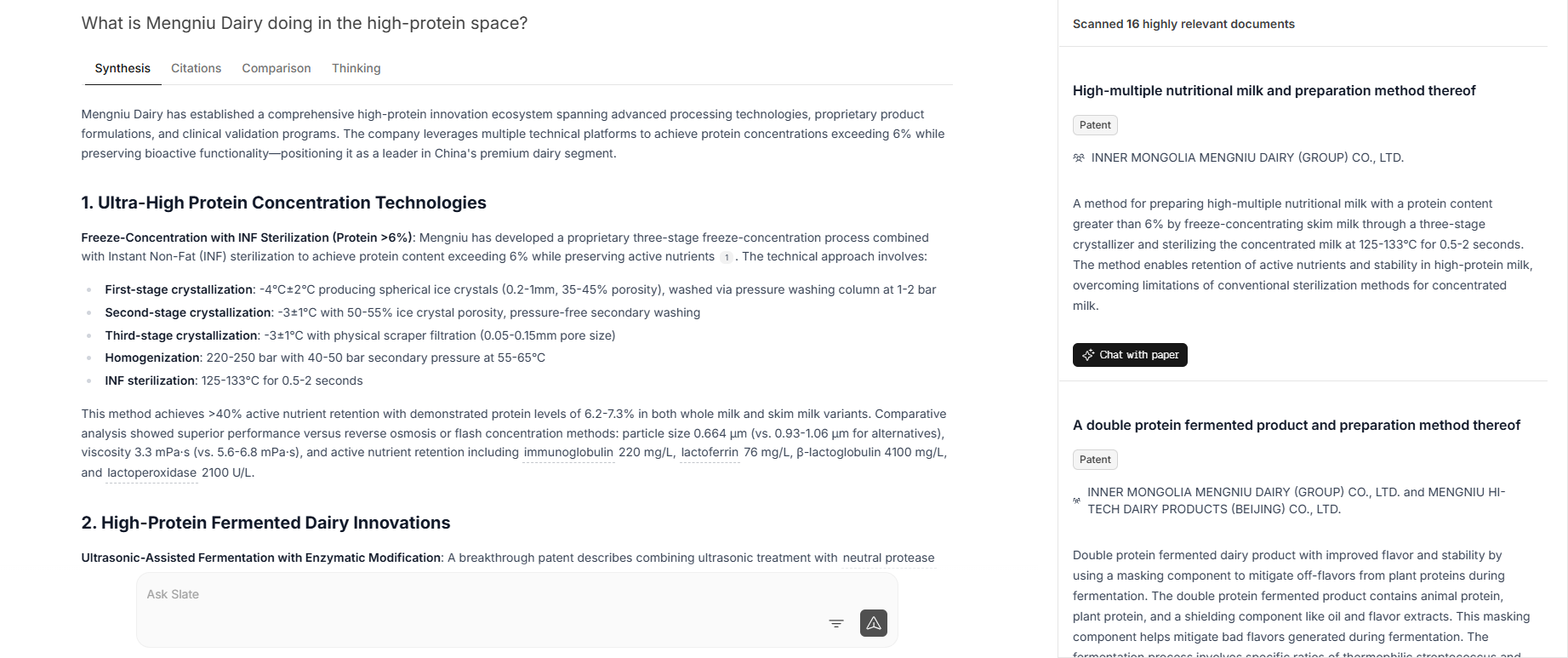
What is Mengniu Dairy doing in the high-protein space?
β-glucans and vegetable purées improve structure and stability in whey protein ice cream
Developing whey ice cream is appealing to manufacturers as whey is a cost-effective ingredient. However, whey-based ice creams suffer from poor structure, a watery texture, and reduced creaminess due to low fat and solids content.
In a study, researchers combined whey proteins with plant-derived ingredients, such as β-glucans (from oat and yeast) and vegetable purées (beet, zucchini, broccoli) to develop an ice cream that closely replicates traditional dairy ice cream.
Three formulations stood out:
- 0.4% Vianoks C45 + 0.75% oat β-glucan
- 0.4% Vianoks C45 + 0.5% yeast β-glucan
- 0.4% Vianoks C45 + 3% whey protein complex + 10% beet purée
Among these:
- Beet-based ice cream had the best sensory scores
- Yeast β-glucan showed strong, stable gel behavior
- Increasing protein beyond 3% caused over-compaction
If working with low-fat or whey-based systems, prioritize yeast β-glucan for gel stability and test vegetable purées (5–10%) to improve sensory performance.
Morinaga Milk uses denatured whey protein to eliminate shrinkage during storage
High-protein ice creams lose volume during storage, a defect known as shrinkage. This is due to increased viscosity in high-protein ice creams.
Morinaga Milk overcomes this industry challenge by using denatured whey protein with tightly controlled composition and viscosity.
Microparticulated denatured whey protein acts like a soft, dispersed structural filler. It stabilizes air bubbles without thickening the liquid. It prevents air collapse during temperature changes during storage, eliminating shrinkage gaps in containers.
Additionally, the viscosity is kept below 800 mPa·s at 5°C, as measured using a B-type viscometer (rotor No. 3, 60 rpm) to prevent shrinkage.
This process ensures the production of stable, smooth, high-protein ice cream.
Currently, high-protein ice creams rely heavily on whey proteins to maintain texture, stability, and a creamy structure. However, due to rising consumer demand, formulators are now exploring plant-based proteins for application in ice creams.
Chlorella protein improves emulsification and reduces stabilizer dependency in dairy-free ice creams
Chlorella microalgae contains 50–60% protein, making it a promising alternative source. However, raw Chlorella extracts contain compounds like chlorophyll, lipids, and carbohydrates that affect taste, color, and functionality. Therefore, purification methods are necessary to obtain usable protein ingredients.
Therefore, researchers in China tested two different methods of extracting and purifying Chlorella proteins. CPP72 was extracted via the ultrafiltration method, and CPP81 via Enzymatic hydrolysis + Ethanol precipitation.
CPP72 showed 33% higher foaming capacity, 14% better emulsification, and about 270× higher viscosity than whey protein. It was successfully used to replace 20% skim milk powder in ice cream.
Another important outcome was that the Chlorella protein helped reduce the need for stabilizers.
| Additive | Reduction |
| Xanthan gum | Reduced by 50% |
| Monoglycerides | Reduced by 33% |
This indicates that the protein itself contributed to stabilizing the ice cream structure.
Accelerate your R&D in the high-protein ice cream space
The protein craze is a lasting trend across the F&B space. Formulators are under increasing pressure to increase protein content across multiple formats, including bars, yogurts, and RTDs, without compromising texture, stability, or processability. Those entering the high-protein ice cream space must target delivering 30–48g per pint.
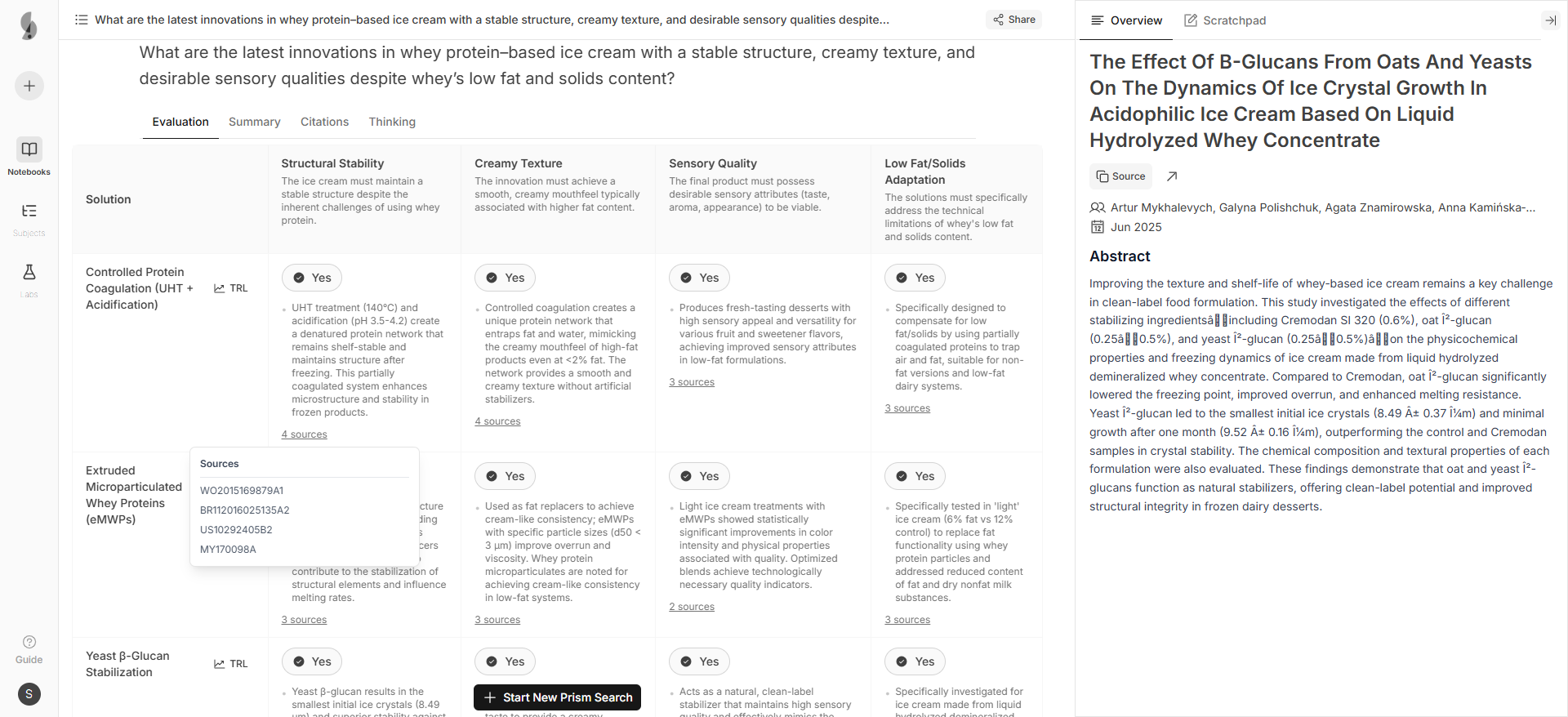
Formulators are exploring extruded microparticulated whey proteins (eMWPs), whey protein microgels, and ultrasonic homogenization to overcome the formulation challenges in high-protein ice cream. However, this research is scattered across patents and research papers.
Most tools study only one variable at a time. Formulators have to run fragmented searches to find the ideal solution. But Slate Prism can help you compare different solutions in parallel for each constraint.